Tavily became the default web search tool for AI agents almost by accident. It was the first search API built for LLMs, LangChain made it the obvious example, and for a prototype it just works: one call, a list of results, cleaned page text included.
Production is where teams start looking around. The bill grows with every agent step, advanced search costs twice as much as basic, and since February 2026 Tavily has a new owner. None of that makes Tavily bad. It does make "which search API should my agent use?" a question worth answering again, with current prices.
We compared seven Tavily alternatives on the things that matter inside an agent loop: what the API actually returns, where its results come from, what 1,000 searches cost, how much you can build on the free tier, and whether you can run it yourself.
Disclosure: we build GcrawlAI, and it's the first entry on this list. We've kept its section to what the product does today, listed its trade-offs, and taken every other vendor's figures from that vendor's own pricing page or docs, checked on 19 October 2026. Prices in this category change often, so confirm before you commit.
- Tavily in 2026: 1,000 free credits a month, then $0.008 per credit pay-as-you-go. A basic search is 1 credit ($8 per 1,000) and an advanced search is 2 ($16 per 1,000). Nebius announced an agreement to acquire Tavily on 10 February 2026.
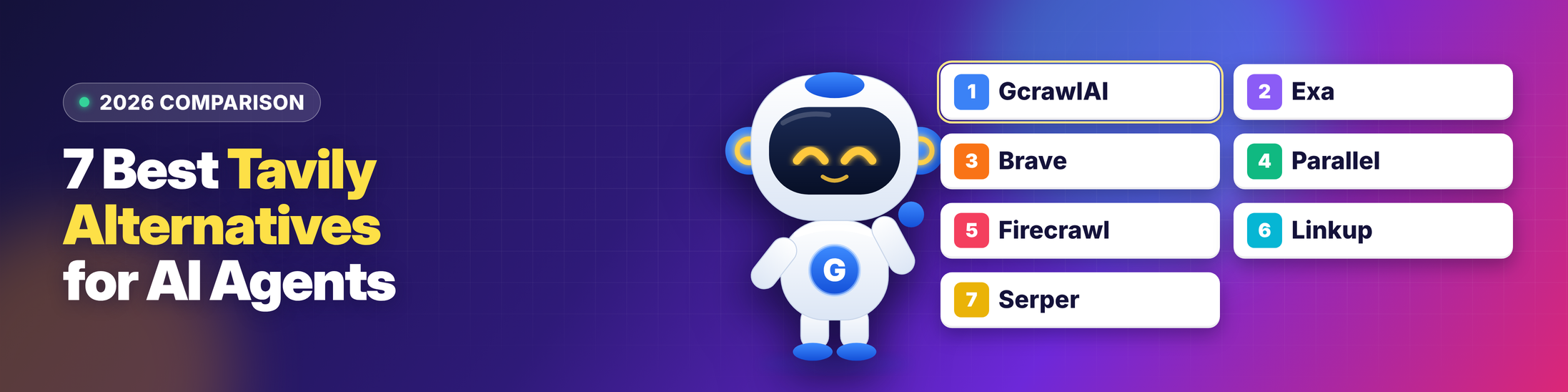
- The 7 best Tavily alternatives: GcrawlAI (search API plus full-page scraping, as a cloud API or self-hosted), Exa (semantic search), Brave Search API (independent index), Parallel (cheapest per search with excerpts), Firecrawl (search plus scraping), Linkup (SOC 2 Type II on every plan) and Serper (cheap raw Google results).
- Cheapest per search: Serper ($0.30 to $1 per 1,000), GcrawlAI ($1 to $6 per 1,000, depending on plan) and Parallel ($1 to $5 per 1,000). Of the three, only GcrawlAI can also scrape the result pages into Markdown.
- Self-hosted Tavily alternative: GcrawlAI (MIT, also available as a managed cloud API) and Firecrawl (AGPL-3.0). Tavily, Exa, Brave, Parallel, Linkup and Serper are cloud-only.
- How to choose: wrap search behind one function, run 20 of your agent's real queries through two or three APIs, and compare hit rate, latency and cost per answered question, not cost per request.
What is the best Tavily alternative for AI agents? It depends on what your agent does after the search. If it reads the pages, use an API that returns full page content: GcrawlAI (cloud API or self-hosted, handles JavaScript and blocked sites, connects through MCP) or Firecrawl. If it needs semantic search, use Exa. For an independent index, use Brave. If cost per search matters most, use Parallel or Serper.
What Tavily does, and what it costs in 2026
Tavily is a search API designed for LLMs. A search returns ranked results with cleaned content from each page, and there are separate endpoints for extract, crawl, map and research. It has an official MCP server and integrations with most agent frameworks, which is a big part of why it became the default.
Pricing is credit-based. Here's what each call costs, from Tavily's API credits documentation and pricing page:
Swipe sideways to see the full table →
| Tavily request | Credits | Pay-as-you-go cost ($0.008 per credit) |
|---|---|---|
| Basic search | 1 | $8 per 1,000 searches |
| Advanced search | 2 | $16 per 1,000 searches |
| Basic extract | 1 per 5 URLs | $1.60 per 1,000 URLs |
| Advanced extract | 2 per 5 URLs | $3.20 per 1,000 URLs |
| Research (pro model) | 15 to 250 per request | $0.12 to $2 per request |
The free Researcher plan gives 1,000 credits a month with no card, and the Project plan is $30 a month for 4,000 credits. Those are fair numbers for a prototype. The trouble starts at agent scale: one user question can trigger three to six searches, an agent that reads pages pushes you toward advanced search, and the per-search price doubles.
The other change is ownership. Nebius announced an agreement to acquire Tavily on 10 February 2026. The API and the free tier still work as documented. But if search is the core retrieval step of your product, it's sensible to keep a second provider tested and ready.
Three kinds of Tavily alternative
"Search API" covers three different products, and most comparisons blur them. The difference shows up in step 4 of an agent's lookup: does the API give you the page, or just a link to it?
Swipe sideways to see the full diagram →
- SERP APIs such as Serper send your query to Google and return Google's ranking as JSON. They're cheap and fast. You get titles, URLs and snippets, nothing more.
- Index APIs such as Brave, Exa, Linkup and Parallel run their own retrieval. Some return only snippets; Exa can return page text, and Parallel returns compressed excerpts designed for LLMs.
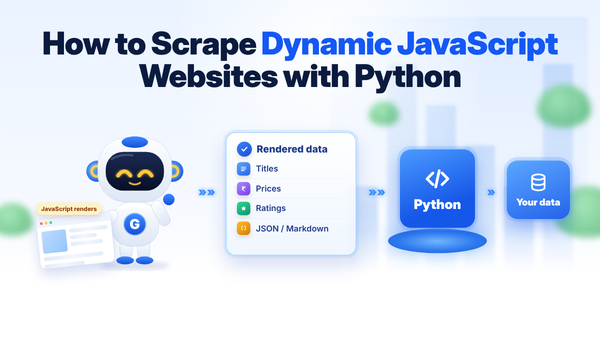
- Search plus scrape APIs such as Tavily, Firecrawl and GcrawlAI find the results and then fetch the pages, so your agent gets readable content. This matters most on JavaScript-heavy sites and sites that block bots, where a plain fetch comes back empty. We cover why in our guide to scraping dynamic JavaScript websites with Python.
Pick the kind first. Then pick the vendor.
Tavily alternatives compared
All prices are per 1,000 searches of about 10 results, from each vendor's pricing page on 19 October 2026.
Swipe sideways to see the full table →
| API | Best for | Price per 1,000 searches | Free tier | Full page content | Results come from | Self-host |
|---|---|---|---|---|---|---|
| Tavily (baseline) | Bundled search + extract | $8 basic, $16 advanced | 1,000 credits/month | Yes | Own crawl + re-ranking | No |
| GcrawlAI | Search + full-page scraping for agents, incl. JS and blocked sites | $1 to $6, depending on plan (1 search = 1 request) | 50 requests/month, no card | Yes (search + batch scrape) | Ranked web results, with engine fallbacks | Yes (MIT), or use the cloud API |
| Exa | Semantic, research-style search | $4 (lite) to $7 (auto/fast), contents $1 per 1,000 pages | $10 credits, reset monthly | Yes | Own index | No |
| Brave Search API | Independent index | $5 | $5 credits/month | No (snippets, LLM Context passages) | Own index | No |
| Parallel | Low cost with LLM-ready excerpts | $1 (Turbo/Fast) to $5 (Basic/Advanced) | 5,000 requests/month | Excerpts; Extract API $1 per 1,000 | Own search infrastructure | No |
| Firecrawl | Search + scraping platform | ≈$1.66 on Standard (2 credits per search) | 1,000 credits/month (500 searches) | Yes | Live web, fetched on demand | Yes (AGPL-3.0) |
| Linkup | Cited grounding with SOC 2 Type II | $5 to $6 | 4,000 queries | Deep tier | Own index + web | No |
| Serper | Cheap raw Google results | $0.30 to $1 | 2,500 queries, no card | No | Google SERP | No |
Swipe sideways to see the full diagram →
The 7 best Tavily alternatives for AI agents
1. GcrawlAI: best Tavily alternative for search plus full pages (cloud or self-hosted)
GcrawlAI is a web scraping and Search API for AI agents. You can use it as a managed cloud API on a paid plan, or run the open-source version on your own servers. It connects to agents through MCP, the Python SDK or plain REST calls. Search returns ranked web results (title, URL, snippet, position) through a router that falls back to other engines when one fails. Then you pass the URLs to batch, which scrapes every page and returns clean Markdown, so the agent reads the page, not the snippet.
That second step is where GcrawlAI differs from a search-only API. The scraper behind it covers the five jobs you'd otherwise build yourself:
- Fetch: rotating residential proxies, with country targeting.
- Render: managed headless browsers with auto-scroll, so JavaScript pages and lazy-loaded content arrive filled in.
- Parse: HTML, LLM-ready Markdown with menus and footers removed, SEO metadata, images and links.
- Orchestrate: scrape, batch, crawl and links endpoints, so you can follow search results into a whole site.
- Unblock: stealth browsers that escalate when a site pushes back.
Here's a Tavily-shaped search tool for an agent: search, then read the top five pages.
from gcrawl_sdk import GcrawlClient

client = GcrawlClient(api_key="gc-YOUR_API_KEY")

def web_search(query, max_results=5, geo="US"):
    """Search the web, then fetch the top results as clean Markdown."""
    serp = client.search(query=query, pagination=1, geo=geo)
    hits = [item for item in serp.results if item.url][:max_results]

    # One batch job scrapes every result page (JS rendering and proxies included)
    job = client.batch(urls=[h.url for h in hits], formats=["markdown"],
                       clean=True, wait=True)
    pages = {p.url: p.markdown for p in job.pages}

    return [
        {"title": h.title, "url": h.url,
         "content": pages.get(h.url) or h.description or ""}
        for h in hits
    ]

for r in web_search("tavily nebius acquisition"):
    print(r["title"], "->", r["url"], f"({len(r['content'])} chars)")
The function returns the same title, url, content shape most agent frameworks expect from Tavily, so it drops into an existing tool definition. For a full agent built on it, see building an autonomous deep research agent with GcrawlAI and LangChain.
Where GcrawlAI is strong
- Cloud API or self-hosted. Start on the managed cloud API with no infrastructure to run. If you later need data to stay on your servers, the core is open source under MIT (GramosoftAI/GcrawlAI on GitHub), which no other API on this list offers under a permissive licence.
- Built for agent connections. Plug it into Claude, Cursor or your own agent through MCP, or register it as a LangChain or OpenAI function tool. Our guide to MCP web scraping shows the setup.
- Full pages from hard sites. Search plus scrape works on pages that a plain fetch can't read, including JavaScript apps and bot-protected sites.
- Low, simple pricing. Searches cost $1 to $6 per 1,000, depending on plan, and scraping a result page is also one request. Full details are on the pricing page.
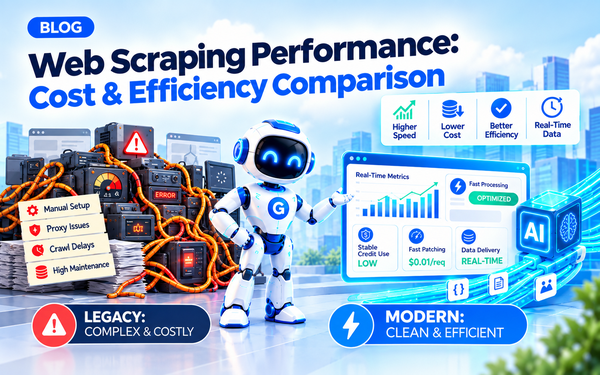
- One request includes everything. On credit-based scraping APIs, the features that make hard pages work cost extra. ScrapingBee, for example, charges 5 credits for a JavaScript-rendered request, 25 with premium proxies and 75 with stealth proxies (ScrapingBee docs). In GcrawlAI, one request is one request: JavaScript rendering, rotating proxies and anti-bot handling are all included, with no credit multipliers.
- Deep search across engines. Deep Search queries several search engines at once and merges the results into one ranked list of URLs, so your agent gets wider coverage from a single call.
- Country-targeted results through the
geoparameter, for agents that answer local questions.
Where it falls short
- Search results are keyword-ranked. If you need semantic "find pages like this" search, Exa is the better tool.
- There's no built-in answer endpoint like Tavily Research; your LLM writes the answer.
- Search and scrape are two calls, not one, so a lookup takes longer than a snippet-only search.
Best for: agents and RAG pipelines that need to read the actual pages, teams that want a managed API now with the option to self-host later, and anyone whose target sites are JavaScript-heavy or block scrapers. If you're also weighing Firecrawl, our GcrawlAI vs Firecrawl comparison covers the differences.
2. Exa: best Tavily alternative for semantic search
Exa runs its own index and searches by meaning rather than exact keywords. Ask for "startups building browser infrastructure for agents" and it finds pages that match the idea, even when they don't use those words. It also has a "find similar" mode that takes a URL and returns pages like it.
Pricing, from Exa's pricing docs: $7 per 1,000 searches on the auto and fast types, $4 on lite and instant, and page contents at $1 per 1,000 pages per content type. Deep search runs $12 to $15 per 1,000. New accounts get $10 in credits, and the free balance resets to $10 every month.
- Strong: conceptual and research queries, people and company search, low latency on the instant tier.
- Weak: no self-hosting, and contents are billed separately, so a search that reads 10 pages costs more than the headline rate.
- Best for: research assistants, sourcing and discovery tools, and RAG where relevance by meaning matters more than freshness.
3. Brave Search API: best Tavily alternative with an independent index
Brave crawls the web itself instead of reselling Google or Bing, and says its index covers more than 40 billion pages. For agents, the interesting part is the LLM Context endpoint, which returns the best passages from the top pages in one call, with a configurable token budget.
Search costs $5 per 1,000 requests, with $5 in free credits each month (about 1,000 searches) and capacity of 50 queries per second. An Answers plan adds cited, summarised answers at $4 per 1,000 requests plus $5 per million tokens.
- Strong: independence from Google, fast responses, zero data retention on enterprise plans.
- Weak: you get snippets and passages, not full pages, so reading a page still needs a fetch step.
- Best for: teams that want a non-Google source, privacy-minded products, and agents that mostly reason over snippets.
4. Parallel: cheapest Tavily alternative with LLM-ready excerpts
Parallel builds web APIs for agents rather than people. Its Search API returns ranked URLs with compressed excerpts: the page text the ranker thinks your model needs, without the rest.
From Parallel's pricing page: $1 per 1,000 searches on the Turbo and Fast processors, $5 on Basic and Advanced, and up to 5,000 free requests a month. The Extract API is $1 per 1,000 pages, and the Task API for structured research ranges from $5 to $2,400 per 1,000 requests depending on the processor.
- Strong: price per search, token-efficient output, a generous monthly free allowance.
- Weak: the deeper research tiers are slow and expensive, and there's no self-hosting.
- Best for: high-volume agents where cost per search decides the budget, and structured enrichment jobs through the Task API.
5. Firecrawl: Tavily alternative for search plus a large scraping platform
Firecrawl started as a scraping API and added search, so a search can return scraped Markdown for each result. It's open source under AGPL-3.0, has a broad feature set and a large community.
Search costs 2 credits per 10 results. On the Standard plan ($83 a month billed yearly, 100,000 credits) that works out to about $1.66 per 1,000 searches. The free plan has 1,000 credits a month, or 500 searches. Scraping each result costs extra credits on top of the search.
- Strong: one platform for search, scrape, crawl and extraction, plus a self-host option.
- Weak: credit costs grow with the features you turn on, and AGPL terms matter if you modify it and offer it as a service.
- Best for: teams that want a full scraping platform with search attached. We've written about how Firecrawl's credit multipliers add up, and there's a wider list of Firecrawl alternatives if it's not the right fit.
6. Linkup: Tavily alternative for compliance-sensitive teams
Linkup is a search API focused on accurate, cited grounding for LLMs. It offers fast, standard and deep search, with deep search extracting content from the top results.
Search runs $0.005 to $0.006 per request ($5 to $6 per 1,000), and you can run 4,000 queries free. According to Linkup's pricing page, SOC 2 Type II is included on every plan, and zero data retention is available on Enterprise.
- Strong: compliance on every plan, cited results, simple per-request pricing.
- Weak: a smaller ecosystem than Tavily, and the 4,000 free queries are a starting allowance rather than a monthly one.
- Best for: finance, legal and healthcare products that need a security review to pass on day one.
7. Serper: cheapest Tavily alternative for raw Google results
Serper returns Google search results as JSON in one to two seconds. You get 2,500 free queries with no card, and paid packs start from as little as $0.30 per 1,000 queries at the largest volumes.
- Strong: price, speed, Google's ranking, and verticals such as news, images and shopping.
- Weak: snippets only, no page content, and it depends on Google's results pages staying scrapable.
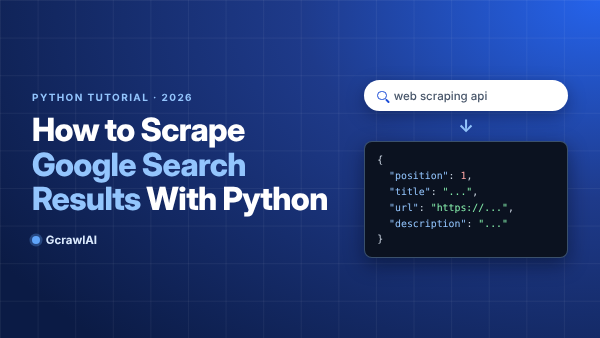
- Best for: SEO tools, rank tracking and agents that only need "what does Google say". If you want to build this yourself, see how to scrape Google search results with Python.
Also worth a look
- Perplexity Sonar returns a generated, cited answer instead of results. Useful when you want the answer, not the sources, though cost per query is harder to predict because it's partly token-based.
- SerpApi covers almost every search engine and vertical with clean structured output, at a higher price than Serper.
- Valyu adds licensed datasets such as SEC filings, PubMed and arXiv to web search, for finance and research agents.
How to choose the right Tavily alternative
Swipe sideways to see the full diagram →
- Decide whether your agent reads pages. If it answers from snippets, Serper, Brave or Parallel will be cheapest. If it reads pages, compare the cost of search plus fetch, not search alone.
- Check where the results come from. SERP-based results (Serper) rank like Google does. Independent indexes (Brave, Exa) can find different pages and miss some long-tail ones.
- Price the whole lookup. A $1 search followed by a separate $2 fetch costs $3. Check how many credits a JavaScript-rendered, proxied page really costs, because multipliers add up fast. Count calls per answered question, not per request.
- Compare recurring free tiers, not one-time grants. A monthly allowance is a development budget; a one-time grant is a demo.
- Keep an exit. Put search behind one function so switching providers is a config change.
How to switch from Tavily without rewriting your agent
Most Tavily integrations look like this: one client, one search call, a loop over results.
from tavily import TavilyClient

tavily = TavilyClient(api_key="tvly-YOUR_API_KEY")
response = tavily.search("tavily nebius acquisition", max_results=5)
for r in response["results"]:
    print(r["title"], "->", r["url"])
The safest way to migrate is to stop calling any vendor directly. Give your agent one web_search() function that always returns title, url and content, and put each provider behind it. Here's a version with four backends, using each vendor's REST API so there are no extra SDKs to install:
import os
import requests
from gcrawl_sdk import GcrawlClient

def tavily(query, n=5):
    r = requests.post("https://api.tavily.com/search", timeout=30,
                      headers={"Authorization": f"Bearer {os.environ['TAVILY_API_KEY']}"},
                      json={"query": query, "max_results": n})
    r.raise_for_status()
    return [{"title": x["title"], "url": x["url"], "content": x["content"]}
            for x in r.json()["results"]]

def brave(query, n=5):
    r = requests.get("https://api.search.brave.com/res/v1/web/search", timeout=30,
                     headers={"X-Subscription-Token": os.environ["BRAVE_API_KEY"]},
                     params={"q": query, "count": n})
    r.raise_for_status()
    return [{"title": x["title"], "url": x["url"], "content": x.get("description", "")}
            for x in r.json().get("web", {}).get("results", [])]

def exa(query, n=5):
    r = requests.post("https://api.exa.ai/search", timeout=30,
                      headers={"x-api-key": os.environ["EXA_API_KEY"]},
                      json={"query": query, "numResults": n, "contents": {"text": True}})
    r.raise_for_status()
    return [{"title": x.get("title", ""), "url": x["url"], "content": x.get("text", "")}
            for x in r.json()["results"]]

def gcrawlai(query, n=5):
    client = GcrawlClient(api_key=os.environ["GCRAWL_API_KEY"])
    hits = [h for h in client.search(query=query, pagination=1, geo="US").results if h.url][:n]
    return [{"title": h.title, "url": h.url, "content": h.description or ""} for h in hits]

BACKENDS = {"tavily": tavily, "brave": brave, "exa": exa, "gcrawlai": gcrawlai}

def web_search(query, n=5):
    """The only function your agent sees. Switch providers with one env var."""
    return BACKENDS[os.getenv("SEARCH_BACKEND", "tavily")](query, n)
Register web_search as the agent's tool, whether that's a LangChain tool, an OpenAI function or an MCP server. Switching provider is now an environment variable, and so is rolling back.
Test on your own queries before you switch
Public benchmarks are a starting point, and most of them are run by vendors. The test that counts is your agent's own traffic. Take 20 or more real queries from your logs, note a domain a good answer should cite, and run them through each backend:
import statistics, time
from search_tool import BACKENDS

# 20+ real queries from your agent's logs, each with a domain a good answer should cite
QUERIES = [
    ("python 3.14 release date", "python.org"),
    ("playwright wait_for_selector timeout default", "playwright.dev"),
    ("nebius tavily acquisition announcement", "nebius.com"),
]

for name, search in BACKENDS.items():
    latencies, hits = [], 0
    for query, expected in QUERIES:
        start = time.perf_counter()
        try:
            results = search(query, n=5)
        except Exception as exc:
            print(f"{name}: {query!r} failed: {exc}")
            continue
        latencies.append(time.perf_counter() - start)
        hits += any(expected in r["url"] for r in results)
    if latencies:
        print(f"{name:9} hit-rate {hits}/{len(QUERIES)}  "
              f"median {statistics.median(latencies):.2f}s  max {max(latencies):.2f}s")
Look at three numbers: how often the right source shows up, median and worst latency, and what each answered question costs once you include any page fetches. If your agent uses search to ground answers, also check how it handles bad results; our guide to corrective RAG with live web search shows one way to catch them.
Frequently asked questions
What is the cheapest Tavily alternative?
Serper, from $0.30 to $1 per 1,000 Google searches; GcrawlAI, $1 to $6 per 1,000 searches depending on plan; and Parallel, from $1 per 1,000 on its Turbo and Fast processors. All three are far below Tavily's $8 per 1,000 basic searches. GcrawlAI is the only one of the three that can also scrape the result pages into clean Markdown.
Is there an open-source or self-hosted Tavily alternative?
Yes. GcrawlAI is open source under the MIT licence and includes search, scraping, crawling and Markdown output; the same features are also available as a managed cloud API. Firecrawl is open source under AGPL-3.0. Tavily itself is cloud-only.
How much does Tavily cost per 1,000 searches?
On pay-as-you-go, $8 per 1,000 basic searches and $16 per 1,000 advanced searches, at $0.008 per credit. The free plan includes 1,000 credits a month, and the Project plan is $30 a month for 4,000 credits.
Is Tavily still available after the Nebius acquisition?
Yes. Nebius announced an agreement to acquire Tavily on 10 February 2026, and the API and free tier continue to work as documented. Teams that depend on it for core retrieval often keep a tested second provider behind the same search function.
Exa vs Tavily: which is better for AI agents?
Exa is better for meaning-based research queries and "find similar" lookups. Tavily is simpler when you want ranked results with cleaned page content from one predictable call. Exa's search is cheaper per 1,000, but its page contents are billed separately.
Do Tavily alternatives work with LangChain and MCP?
Yes. GcrawlAI supports MCP and agent framework connections out of the box, and any search API can become a LangChain tool or an MCP tool if you wrap it in one function that returns title, URL and content. Wrapping it that way also lets you switch providers without changing the agent.