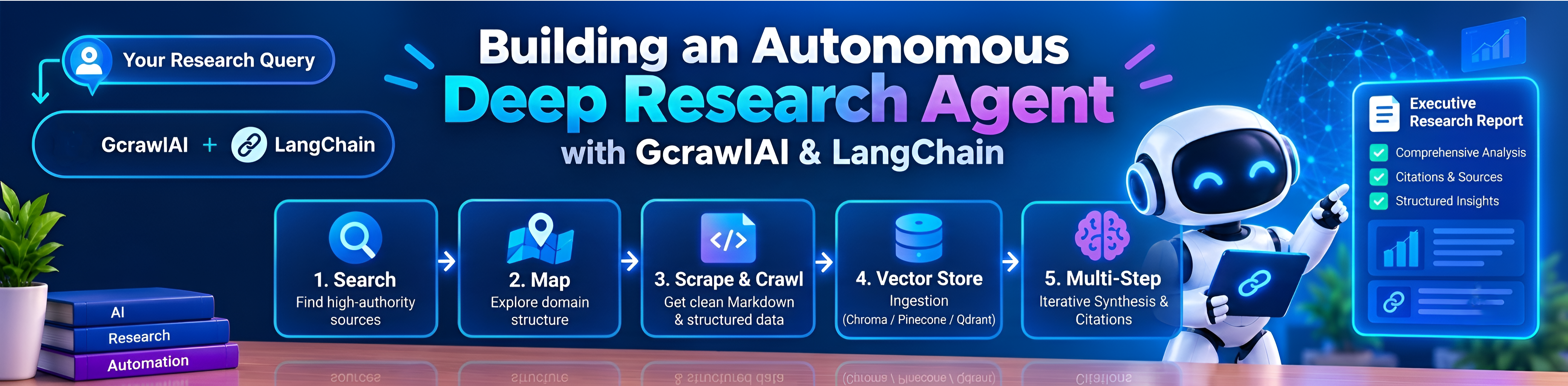
Autonomous Deep Research Agent: Architecture & Implementation
The Rise of Deep Research Agents in 2026
In late 2026, the paradigm of generative AI shifted dramatically from single-turn retrieval ("summarize this link") to autonomous multi-step deep research. Whether you are building an automated competitive intelligence engine, an investment research copilot, or a legal research assistant, your AI agent cannot rely on static pre-training data or a single search query.
An autonomous deep research agent must:
- Break down ambiguous inquiries into multi-dimensional sub-queries.
- Traverse search engines and discover high-authority domain architectures.
- Bypass complex modern anti-bot protections (Cloudflare Turnstile, DataDome, PerimeterX).
- Extract noise-free, token-optimized Markdown from heavy dynamic Single Page Applications (SPAs).
- Recursively crawl linked sub-pages to build comprehensive context before generating citations.
The 3 Lethal Bottlenecks of Traditional Web Scraping
- The Raw HTML Token Tax: Feeding raw HTML directly to an LLM wastes up to 85% of your context window on CSS, tracking scripts, base64 images, and navigation menus. This burns hundreds of dollars in OpenAI or Claude token fees and drastically increases hallucination rates.
- The Credit Multiplier Trap: Traditional scraping APIs advertise low base rates, but charge 5x credits for JavaScript rendering, 10x for residential proxies, and 25x for stealth bypass. A deep research agent analyzing 50 pages can easily consume 1,500 credits per run, destroying unit economics.
- Slow Execution Latency: Local headless browser frameworks (like Playwright in containerized microservices) suffer from memory bloat and take 5 to 15 seconds per page, paralyzing interactive agent workflows.
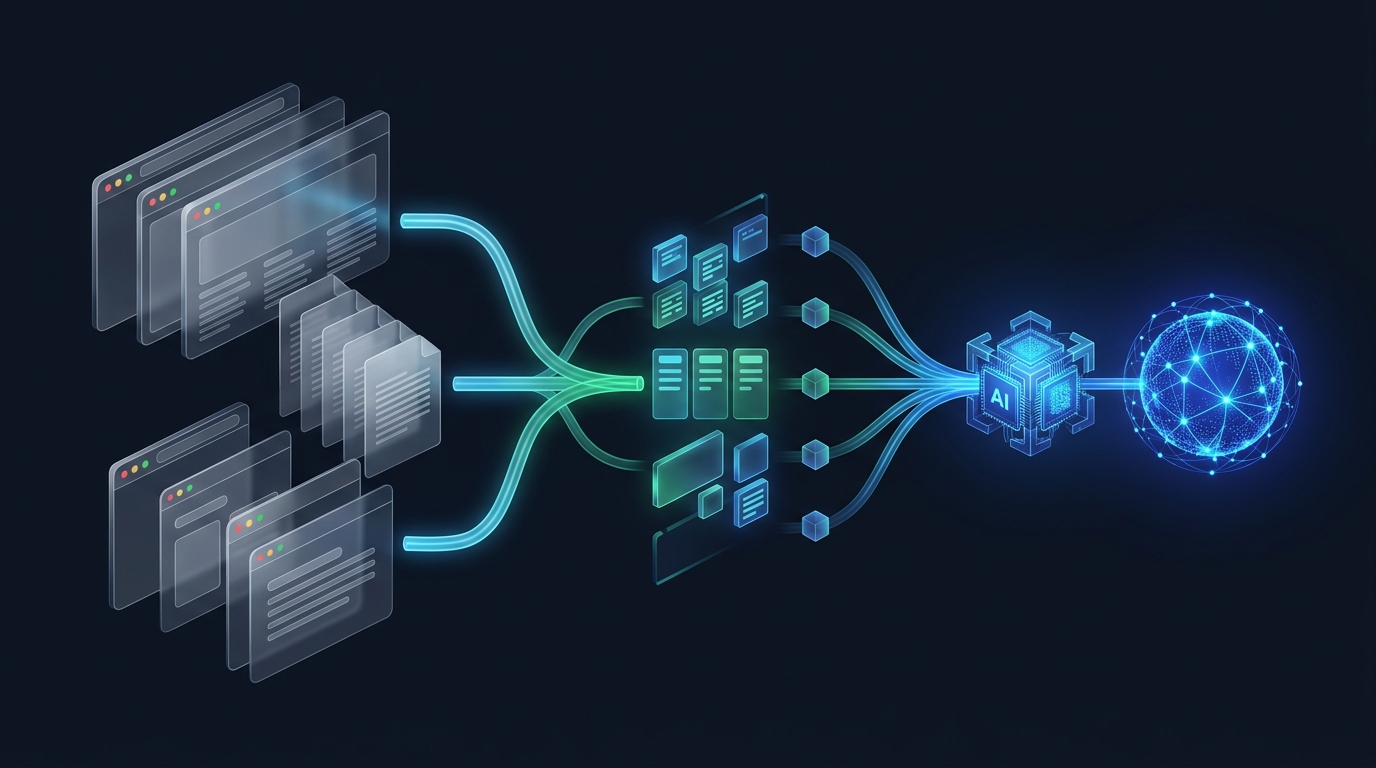
The Deep Research Architecture Blueprint
USER INQUIRY
      │
      ▼
┌──────────────────────────────────────────────┐
│  AGENT REASONING & QUERY DECOMPOSITION (LLM) │
└──────────────────────┬───────────────────────┘
                       │
       ┌───────────────┴───────────────┐
       ▼                               ▼
1. DISCOVERY (/v1/search)    2. MAPPING (/v1/map)
   Find candidate targets       Map full domain URL trees
       │                               │
       └───────────────┬───────────────┘
                       ▼
3. TOKEN-OPTIMIZED EXTRACTION (/v1/scrape & /v1/crawl)
   • Headless Chromium rendering included
   • Rotating residential proxies included
   • 1 Request = 1 Request billing
   • Strips ads, navbars, and tracking bloat
                       │
                       ▼
┌──────────────────────────────────────────────┐
│  CLEAN MARKDOWN + TYPED STRUCTURED JSON      │
└──────────────────────┬───────────────────────┘
                       │
       ┌───────────────┴───────────────┐
       ▼                               ▼
4. VECTOR STORE INGESTION    5. MULTI-STEP REASONING
   (Chroma / Pinecone / Qdrant) (Iterative Synthesis & Citations)
                       │
                       ▼
            EXECUTIVE RESEARCH REPORT
Step-by-Step Implementation with Python
Step 1: Discover High-Authority Sources with Web Search
import requests

GCRAWLAI_API_KEY = "your_api_key_here"

def search_sources(query: str, limit: int = 5):
    url = "https://api.gcrawlai.com/v1/search"
    headers = {"Authorization": f"Bearer {GCRAWLAI_API_KEY}"}
    payload = {"query": query, "limit": limit}
    response = requests.post(url, json=payload, headers=headers)
    return response.json().get("data", [])
Step 2: Map Domain Trees to Target High-Signal Content
def map_domain_tree(domain: str, limit: int = 50):
    url = "https://api.gcrawlai.com/v1/map"
    headers = {"Authorization": f"Bearer {GCRAWLAI_API_KEY}"}
    payload = {"url": domain, "limit": limit}
    response = requests.post(url, json=payload, headers=headers)
    return response.json().get("data", {}).get("links", [])
Step 3: Extract Clean Markdown & Structured JSON (1 Request = 1 Request)
def scrape_to_markdown(target_url: str):
    url = "https://api.gcrawlai.com/v1/scrape"
    headers = {"Authorization": f"Bearer {GCRAWLAI_API_KEY}"}
    payload = {
        "url": target_url,
        "formats": ["markdown", "json"],
        "schema": {
            "type": "object",
            "properties": {
                "headline": {"type": "string"},
                "key_findings": {"type": "array", "items": {"type": "string"}},
                "numerical_data": {"type": "object"}
            }
        }
    }
    response = requests.post(url, json=payload, headers=headers)
    result = response.json().get("data", {})
    return result.get("markdown"), result.get("json")
Cost Comparison: 1:1 Request Billing vs Credit Multipliers
| Scraping Provider | Billing Model | Effective Multiplier | Monthly Cost (10k JS Scrapes) |
|---|---|---|---|
| GcrawlAI | 1 Request = 1 Scrape | 1x (Included) | $19 - $49 / mo |
| Firecrawl | Credits System | 5x - 10x per scrape | $83 - $333 / mo |
| ScrapingBee | Credits Multiplier | 5x - 25x per scrape | $99 - $249 / mo |
| Scrapfly | API Credits + ASP | 5x - 30x per scrape | $100 - $300 / mo |
Key Takeaways for AI Engineers
- Token hygiene is paramount: Don't feed raw HTML into LLM context windows. Token-optimized Markdown saves up to 80% on vector storage and inference costs.
- Map before you crawl: Inspect domain link structures with
/v1/mapto avoid scraping low-value or duplicate sub-pages. - Predictable billing scales better: Building autonomous agents on credit multiplier APIs creates unpredictable cost spikes. Choose transparent 1:1 request billing for production software.
Frequently asked questions
Why is clean Markdown output superior to raw HTML for Deep Research?
Raw HTML contains 75% to 85% boilerplate such as navbars, scripts, advertisements, and tracking pixels that exhaust LLM context windows and cause hallucinations. Converting to clean Markdown reduces token overhead by up to 80% while retaining high-fidelity semantic structure.
How does GcrawlAI prevent credit exhaustion during deep research runs?
Traditional scraping APIs use credit multipliers (e.g., 5x for JavaScript, 25x for stealth proxies), which quickly burn hundreds of credits on a single research session. GcrawlAI charges strictly 1 Request = 1 Request with JavaScript rendering and residential proxies included.