Myntra Scraper: Extract Product, Price & Review Data at Scale
Myntra is huge — one of the biggest fashion platforms in India, with listings across clothing, footwear, accessories, and beauty from more brands than anyone could browse by hand. That scale is the whole point for anyone doing price monitoring, competitor tracking, or fashion trend research, but it is also the problem: nobody is clicking through a catalog that size manually.
A dedicated Myntra scraper can automate that collection process, turning product pages and listing results into structured data that can be analyzed, stored, compared, and refreshed on a schedule.
What a Myntra Scraper Actually Extracts
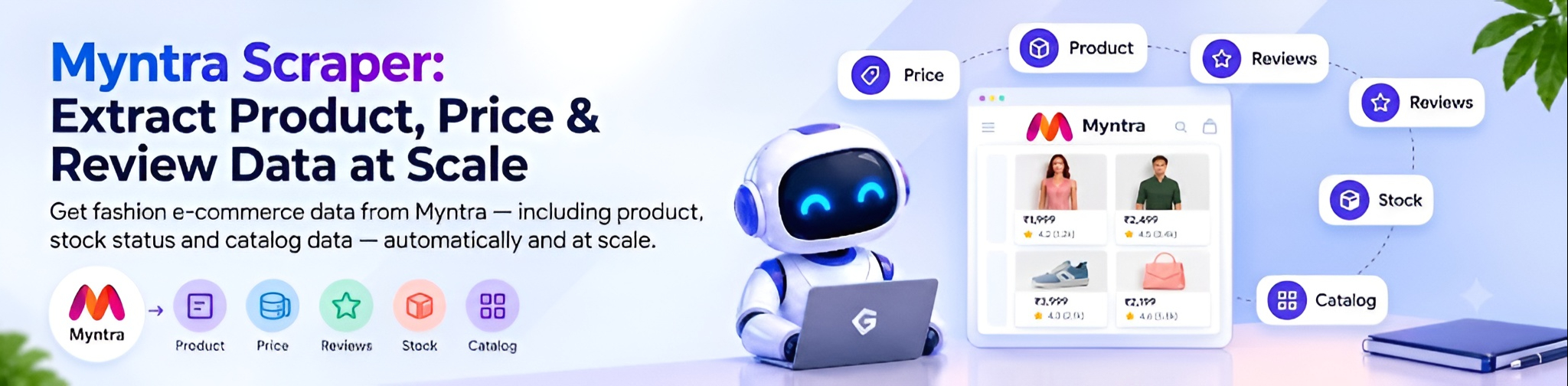
Instead of going page by page, a Myntra scraper can work through multiple products, categories, and search results. Depending on the extractor, common fields include:
Core product fields
- Product name, brand, and category
- Current price, MRP, and discount percentage
- Rating and review count
- Size and color variants
- Product images and product URL
Deeper extraction
- Stock availability at the size level
- Seller name and country of origin, where exposed
- Full product descriptions
- Individual customer reviews and comments
- Style-specific feedback for research
Why Businesses Scrape Myntra
Price monitoring
Track prices, discounts, seasonal markdowns, and promotions across large product sets without checking every SKU manually.
Market research
Aggregate category and brand data to understand product visibility, price bands, ratings, and broader fashion trends.
Catalog building
Use product research data as an input for assortment planning, storefront research, and e-commerce workflows.
Inventory checks
Monitor size-level availability to identify assortment gaps and potential demand signals.
How These Extractors Typically Work
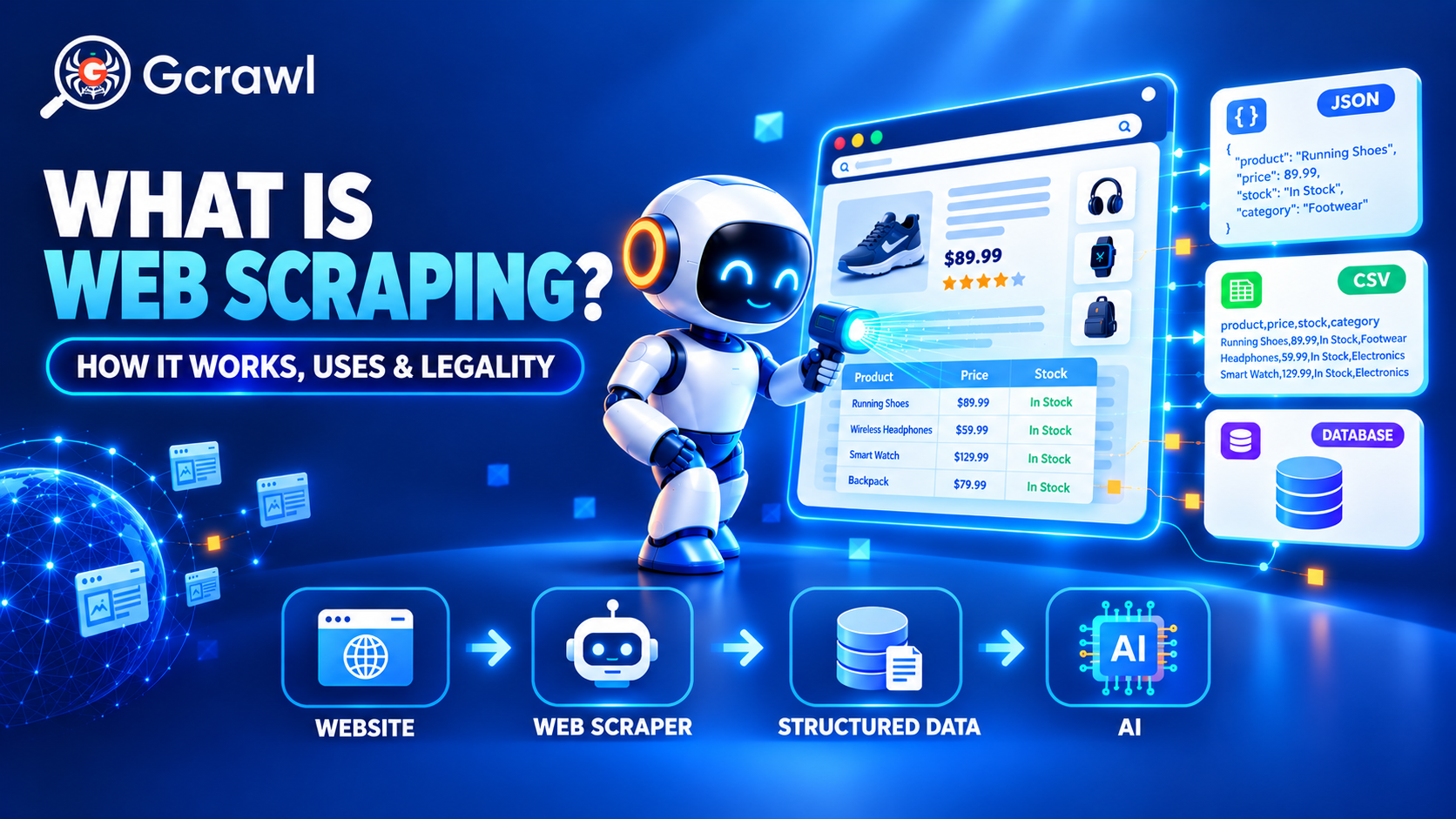
Most extraction workflows start with a search keyword, category URL, or filtered listing page[cite: 2]. The scraper then paginates through the results and returns the collected information in a structured format such as JSON or CSV.
Some workflows support deeper extraction for full descriptions, image sets, and size-level stock. Large jobs may be split into smaller batches, while scheduled runs help keep fast-changing price and stock data current.
Sample Python Extraction Workflow
If you are exploring how data parsing looks conceptually using a standard Python requests setup, here is a quick illustration of how product elements can be targeted:
import requests
from bs4 import BeautifulSoup

headers = {
    "User-Agent": "Mozilla/5.0"
}

url = "https://www.myntra.com/some-product"

response = requests.get(url, headers=headers)

if response.status_code == 200:
    soup = BeautifulSoup(response.text, "html.parser")

    title = soup.find("h1", {"class": "pdp-title"})
    price = soup.find("span", {"class": "pdp-price"})

    print(f"Product: {title.text.strip() if title else 'N/A'}")
    print(f"Price: {price.text.strip() if price else 'N/A'}")
else:
    print(f"Request failed with status code: {response.status_code}")
The Technical Reality Behind Scraping Myntra
Myntra, like many large e-commerce platforms, is not simply a static HTML site. Dynamic content, pagination, and anti-automation systems can make large-scale extraction substantially more complicated than reading a page source.
JavaScript rendering & Captchas
Dynamic product grids, review content, and security controls like CAPTCHAs require robust browser-like rendering and rotating proxies before information can be reliably extracted.
Traffic controls & Rate Limits
Repeated automated requests trigger rate limits. Managing proxy rotation and request headers correctly is crucial for larger jobs.
Pagination logic
Large category listings need reliable pagination logic to reduce missed pages, duplicates, and incomplete datasets.
Scale & Maintenance
A workflow for a few products changes drastically when scaling to thousands of SKUs that require regular updates.
Best Practices for Monitoring Frequencies
When setting up ongoing e-commerce pipelines, frequency matters:
- Price tracking: Run daily checks to capture fast-moving flash sales or dynamic markdowns.
- Catalog expansion: Run weekly or bi-weekly batch crawls for broad category analytics.
- Throttling: Add strategic delays between requests to keep scraper performance smooth and sustainable.
Is Scraping Myntra Legal?
Scraping questions are highly dependent on the data, access method, purpose, jurisdiction, and platform terms. Publicly visible information is different from data behind authentication or access controls. Legal precedent such as hiQ Labs v. LinkedIn is often discussed in this context, but it does not create a blanket rule that every scraping use case is lawful.
Myntra's current Terms of Service and other applicable rules should be reviewed before automated collection, especially for commercial or high-volume use. For a material commercial workflow, obtaining advice from a qualified legal professional can help assess the specific use case.
Building It Yourself vs. Using an Extractor
| Factor | Custom Python scraper | Managed extractor / API |
|---|---|---|
| Initial setup | Requires coding and infrastructure | Start from an existing extraction workflow |
| Small one-off jobs | Can work well for focused tasks | Useful when speed matters more than custom code |
| Rendering | Build and maintain browser/rendering logic | Can be handled as part of the extraction service |
| Traffic resilience | Requires your own request and infrastructure strategy | Infrastructure can be managed centrally |
| Maintenance | Your team owns break/fix work when site behavior changes | Provider maintains the extraction infrastructure |
| Recurring monitoring | Requires your own scheduler and data pipeline | Designed for repeatable extraction workflows |
A Simpler Way to Handle It
Rather than maintaining separate logic for rendering, traffic handling, and extraction just to keep a Myntra workflow running, GcrawlAI provides a single API-oriented approach for scraping, crawling, and mapping web data.
For supported extraction workflows, GcrawlAI is designed to turn web pages into clean, structured data suitable for AI applications, research pipelines, and downstream analysis — reducing the amount of scraping infrastructure you need to build and maintain yourself.
What to look for in a scalable extractor
- Structured output you can send directly into your pipeline
- Support for dynamic web content where required
- Reliable handling of larger crawl and extraction jobs
- Clear controls for repeatable workflows
- Output suitable for analytics, AI, RAG, and data operations
Frequently asked questions
Do I need proxies for scraping Myntra?
For larger automated workloads, traffic management can become important because repeated requests may encounter rate limits or anti-bot controls. The exact infrastructure needed depends on request volume, frequency, and the extraction method.
Can scraped Myntra data be scheduled for ongoing monitoring?
Yes. Recurring extraction workflows can be used to refresh product, price, stock, and rating datasets so that monitoring does not depend on manually rerunning the same process.
Can I use Myntra data for price and competitor research?
Public product information can be useful for research and monitoring, subject to the platform's terms and applicable law. Your specific use case should be reviewed before high-volume or commercial collection
Is GcrawlAI suitable for AI and RAG workflows?
GcrawlAI is designed to convert web content into clean structured data that can be used in AI applications, RAG pipelines, research workflows, and automation